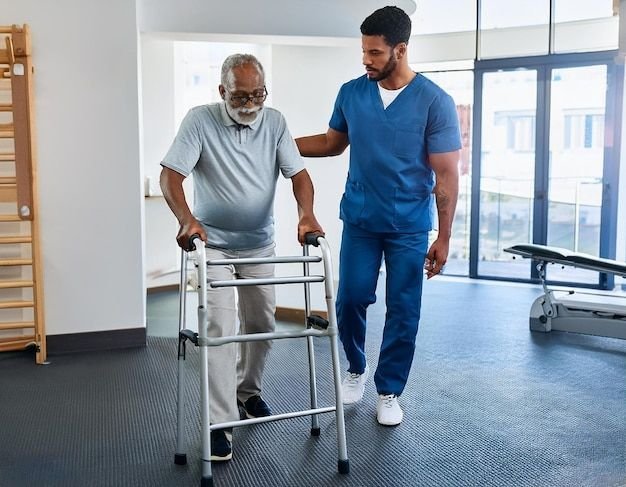
USA visa sponsorship rehabilitation therapy jobs in 2026 offer salaries from $68,000 to $120,000 per year, with EB-3 green card sponsorship, employer-paid health insurance worth $8,000 to $18,000 annually, and full workers compensation coverage from day one. Demand for healthcare jobs in the USA for foreigners is rising rapidly, with employers actively filing USCIS visa petitions due to nationwide labor shortages.
Major hospital systems across California, Texas, New York, and Florida are hiring internationally trained physical therapists, occupational therapists, and speech pathologists — covering all immigration costs. This guide explains visa types, salary structures, licensing requirements, and the exact application process to secure a sponsored job in the United States.
What Rehabilitation Therapy Jobs in the USA Are About
Rehabilitation therapy jobs in the USA are specialized healthcare roles focused on helping patients recover from injury, illness, surgery, or disability. These positions are available across a wide range of settings, including:
- Hospitals and major medical centers
- Outpatient rehabilitation clinics
- Nursing homes and long-term care facilities
- Schools and pediatric therapy programs
- Home healthcare agencies
- Sports medicine and rehabilitation centers
All of these settings actively recruit internationally sponsored therapists through USCIS-approved employer sponsorship programs. The Department of Labor classifies rehabilitation therapy as a priority shortage occupation eligible for H-1B healthcare visa sponsorship and EB-3 green card employer sponsorship. Salaries in this sector grew an average of 5.8 percent annually between 2022 and 2026 as domestic training programs continue to fall short of patient demand.
This guide is for internationally qualified therapists seeking visa sponsorship jobs in the USA for foreigners — with full legal work authorization and a structured path to permanent residency.
Overview of Rehabilitation Therapy Roles
Each rehabilitation therapy discipline in the USA has distinct licensing requirements, salary benchmarks, and USCIS visa eligibility criteria. Understanding these differences before applying prevents costly application errors and processing delays.
- Physical Therapists (Physiotherapists) $85,000 to $115,000: Physical therapist jobs in the USA with visa sponsorship are among the most commonly listed positions on recruitment platforms. These professionals help patients rebuild mobility, strength, and function after injury or surgery. The physical therapist salary in the USA in 2026 averages between $85,000 and $110,000 per year depending on location and specialty.
- Occupational Therapists $78,000 to $102,000: These professionals help patients regain the skills needed for daily living and independent work. They are in especially high demand in aged care, pediatric settings, and mental health rehabilitation. Occupational therapist salaries in the USA range from $78,000 to $102,000 per year.
- Speech Therapists (Speech Pathologists) $75,000 to $100,000: Speech pathology is one of the fastest-growing healthcare fields in America. Speech therapists diagnose and treat communication and swallowing disorders across all age groups. Salaries range from $75,000 to $100,000 per year, with higher pay in California, Texas, and New York.
- Rehabilitation Counselors $65,000 to $90,000: These specialists help patients manage the psychological and emotional impact of physical disability or chronic illness. They are in growing demand particularly in mental health and geriatric settings. Salaries typically range from $65,000 to $90,000 per year.
Why Demand In Healthcare Jobs High in the USA in 2026
The US healthcare worker shortage is the most acute in modern history. The Bureau of Labor Statistics projects 18 percent employment growth for physical therapists and 12 percent for occupational therapists through 2032 — both far above the national average for all occupations.
The American Speech-Language-Hearing Association reports over 14,000 unfilled speech pathologist roles in 2026 alone. The American Hospital Association estimates over 500,000 healthcare positions remain unfilled nationwide.
The core driver is demographics. The US Census Bureau projects the population aged 65 and older will reach 82 million by 2050, sustaining long-term demand for stroke recovery, hip fracture rehabilitation, cognitive therapy, and geriatric care that domestic training programs cannot meet at current graduation rates.
US physical therapy schools produce approximately 12,000 graduates annually against a projected demand increase of 42,000 positions through 2032. That structural gap is why employers including Mayo Clinic, Kaiser Permanente, HCA Healthcare, and Kindred Healthcare are investing in formal international recruitment programs with USCIS-certified immigration attorneys on staff.
How Visa Sponsorship Works: Legal Process and Cost Breakdown
Visa sponsorship means your US employer takes full financial and legal responsibility for your immigration process. You pay nothing for the core visa costs.
Under Department of Labor regulations, employers are legally prohibited from recovering PERM labor certification fees, USCIS filing fees, or immigration attorney costs from sponsored workers. Any employer requesting payment from you for visa sponsorship is violating federal law. Report it immediately to the DOL Wage and Hour Division at dol.gov.
The process works in three stages:
- Stage 1 — PERM Labor Certification The employer files with the Department of Labor to confirm no qualified US worker is available for the position. Employer cost: $5,000 to $15,000 in attorney and preparation fees. Timeline: 6 to 18 months.
- Stage 2 — USCIS Petition The employer files Form I-129 (H-1B) or Form I-140 (EB-3 green card) with USCIS. Filing fees range from $730 to $4,500. Premium processing via Form I-907 costs an additional $2,805 and reduces the decision timeline to 15 business days — paid by the employer at most major health systems.
- Stage 3 — Visa Application and Entry You apply at the US consulate or embassy in your home country. You submit your passport, approval notice, medical examination results ($200 to $400), and police clearance documents. Consular processing takes 4 to 12 weeks. Your workers compensation and employer-sponsored health insurance activate from day one of employment.
Visa Types for International Rehabilitation Therapists in the USA
Understanding the correct USA visa sponsorship pathway is critical when applying for rehabilitation therapy jobs. Each visa type has different salary thresholds, processing timelines, and long-term immigration benefits.
1. H-1B Visa — Skilled Healthcare Worker Visa (High Demand)
The H-1B visa is the most common option for internationally qualified rehabilitation therapists applying for healthcare jobs in the USA.
- Valid for up to 6 years (initial 3 years + renewal)
- Requires employer-filed Labor Condition Application (LCA) with the Department of Labor
- Employer must meet prevailing wage requirements
- Employer costs: $1,500 – $4,500 (fully covered)
- Processing time: 3–6 months
- Premium processing: 15 business days ($2,805, paid by employer)
- Common for:
- Physical therapists
- Occupational therapists
- Speech pathologists
2. EB-3 Green Card — Permanent Residency Pathway (Highest Value)
The EB-3 visa is the most valuable long-term option, offering direct permanent residency (green card) for rehabilitation therapists.
- Provides lifetime work authorization in the USA
- Includes spouse and children under 21
- Employer covers:
- PERM labor certification
- USCIS petition fees
- Immigration attorney costs
- Total employer cost: $5,000 – $15,000
- Worker cost: $325 – $875 (medical exam + embassy fees only)
- Processing time: 18–36 months
3. H-2B Visa — Temporary Healthcare Work Visa
The H-2B visa is used for short-term or seasonal healthcare roles where employers have urgent staffing needs.
- Designed for temporary or contract-based positions
- Annual cap of 66,000 visas
- Maximum stay: up to 3 years
- Does not lead to permanent residency
- Includes:
- Mandatory workers compensation insurance
- Employer-sponsored health insurance coverage
Top Rehabilitation Therapy Jobs with Visa Sponsorship in the USA in 2026
The USA’s rehabilitation sector actively recruits internationally sponsored therapists across four primary discipline areas and four specialized fields — each with different salary benchmarks, licensing requirements, and state-level demand concentrations
1. Physical Therapy
The highest-demand rehabilitation discipline in the USA. Salary: $85,000 to $115,000 per year. Employers including Kaiser Permanente offer 401k matching up to 4 percent and employer-sponsored health insurance. H-1B and EB-3 sponsorship widely available. Demand strongest in California, Texas, and Florida.
2. Occupational Therapy
Salary: $78,000 to $105,000 per year. Employers including Kindred Healthcare and Select Medical cover full PERM and immigration attorney costs. High demand in aged care and community disability settings across all four major demand states.
3. Speech Pathology
Salary: $84,000 to $108,000 per year. School districts in California and Texas offer signing bonuses of $5,000 to $15,000 plus full health insurance. Cleveland Clinic and major hospital networks provide H-1B and EB-3 sponsorship for specialized candidates.
4. Neuro-Rehabilitation
One of the highest-paying therapy specializations in the USA. Salary: $88,000 to $120,000 per year. Mayo Clinic, Cleveland Clinic, and Johns Hopkins Medicine all provide full visa sponsorship and immigration attorney support at no cost to the worker.
5. Geriatric and Mental Health Rehabilitation
The fastest-growing rehabilitation segment in the USA. Salary: $72,000 to $98,000 per year. Employers including HCA Healthcare and Community Health Systems maintain consistent EB-3 sponsorship programs. Malpractice insurance provided by employer in all certified facility placements.
6. Pediatric Rehabilitation
Salary: $68,000 to $90,000 per year. Leading employers include Children’s Hospital of Philadelphia and Boston Children’s Hospital. Roles available in hospitals and federally funded early intervention programs across major US cities.
7. Sports Rehabilitation
Salary: $80,000 to $120,000 per year. Strongest demand in California, Texas, and New York. H-1B sponsorship available through sports medicine clinics and hospital-affiliated programs. Note: private practice roles require malpractice insurance at $1,500 to $3,500 per year.
Best US States with Highest Rehabilitation Therapists Salaries
One of the main attractions of applying for rehabilitation therapists jobs in USA with visa sponsorship is the competitive salary. However, rehabilitation therapists pay differs greatly depending on the state, city, and demand for healthcare workers.
Here are the top U.S. states that currently offer the highest rehabilitation therapists salaries:
- California: Average salary: $102,000 to $118,000 — the highest in the country. Over 32,000 licensed physical therapists employed statewide with a 28 percent vacancy rate in rural areas. Kaiser Permanente, Dignity Health, and Stanford Health Care all sponsor H-1B and EB-3 visas. Over 200 HRSA-designated shortage areas qualify for priority USCIS processing.
- Texas: Average salary: $88,000 to $105,000. Over 8,500 unfilled physical therapy positions statewide in 2026. Baylor Scott and White Health and HCA Houston Healthcare both run active EB-3 programs. Demand concentrated in Houston, Dallas, Austin, and San Antonio.
- New York: Average salary for speech pathologists: $92,000 to $108,000. Mount Sinai, NYU Langone, and NewYork-Presbyterian recruit internationally sponsored therapists year-round. Over 4,200 unfilled speech pathologist roles in public schools — with EB-3 sponsorship plus full health insurance offered by school district employers.
- Florida: Average salary for occupational therapists: $82,000 to $97,000 plus employer-paid health insurance. Over 9,000 unfilled allied health positions statewide in 2026. Encompass Health and Kindred Healthcare operate active international recruitment programs across Miami, Tampa, and Orlando. Highest per-capita demand for geriatric rehabilitation therapists in the country.
Salary, Insurance, and Benefits for Visa Sponsored Rehabilitation Therapy Jobs in USA
USA visa sponsorship rehabilitation therapy jobs come with one of the strongest total compensation packages available to international healthcare workers anywhere in the world. Employers including Mayo Clinic, Kaiser Permanente, HCA Healthcare, and Kindred Healthcare provide this full package to all internationally recruited rehabilitation therapists — with health insurance and workers compensation activating from day one.
2026 Salary Scale for Rehabilitation Therapy Jobs USA
RoleEntry LevelMid-LevelSenior Level
Physical Therapist $72,000 $92,000 $115,000+
Occupational Therapist $68,000 $87,000 $105,000+
Speech Pathologist $65,000 $84,000 $100,000+
Rehabilitation Counselor $58,000 $74,000 $88,000+
Neuro-Rehabilitation Specialist $75,000 $95,000 $120,000+
Pediatric Rehabilitation Therapist $62,000 $78,000 $95,000+
Sports Rehabilitation Therapist $68,000 $88,000 $120,000+
All salaries are in USD per year. Figures reflect 2026 Bureau of Labor Statistics benchmarks and employer-reported compensation data across California, Texas, New York, and Florida.
Health Insurance Benefits
Employer-sponsored health insurance is one of the most financially significant benefits included in USA visa sponsorship jobs for foreigners in healthcare. Most USCIS-approved employers provide:
- Full medical coverage: doctor visits, specialist consultations, emergency care, hospitalization, and surgery
- Prescription drug coverage included at no additional premium cost
- Dental and vision insurance in most full-time packages
- Total annual value: $8,000 – $18,000 depending on plan tier and employer
- Coverage activates within 30 to 90 days of your start date — confirm the exact activation date before signing your employment contract
For internationally recruited therapists, this benefit alone offsets a significant portion of the cost of living in states like California and New York where private health insurance would otherwise cost $600 – $1,500 per month out of pocket.
Workers Compensation Insurance
Workers compensation is mandatory under US federal and state law for all employees — including visa-sponsored international workers. You are covered from your first day of employment regardless of your visa type or immigration status.
What workers compensation covers:
- 100% of all medical treatment costs for any workplace injury or occupational illness
- 60 – 67% of your average weekly wage during any period you cannot work due to a covered injury
- Rehabilitation and retraining costs if a workplace injury affects your ability to practice
- Legal protection — your employer cannot terminate your employment in retaliation for filing a workers compensation claim
If your employer fails to carry workers compensation insurance, report it immediately to your state labor board. This is a federal violation carrying significant employer penalties.
Malpractice Insurance
All licensed rehabilitation therapists practicing in US clinical settings are required to carry professional liability insurance, also known as malpractice insurance. In the vast majority of employer-sponsored positions, this is provided and funded entirely by the employer.
- Employer-funded malpractice insurance covers claims arising from patient care decisions made in the course of your employment
- If you move into private practice, individual malpractice insurance costs $1,500 – $3,500 per year
- Confirm your employer’s malpractice policy explicitly covers you before you begin patient care — get this in writing
Full Benefits Package: What You Get with USA Visa Sponsorship Jobs
- Salary: $68,000 – $120,000 annually
- Health insurance: $8,000 – $18,000 per year — medical, dental, and vision
- Workers compensation: 100% injury medical coverage + 60–67% lost wage replacement
- Malpractice insurance: employer-funded for all clinical positions
- 401k retirement plan: 3–5% employer matching — worth $2,100 – $6,000 annually on a $70,000 base
- Paid time off: 15–25 days annually plus all federal public holidays
- Continuing education: $1,500 – $3,000 per year employer-funded
- Signing bonus: $5,000 – $20,000 for shortage area and rural placements
- Relocation assistance: $3,000 – $15,000 for international hires
- Free visa sponsorship: PERM labor certification, USCIS filing fees, and immigration attorney costs — all covered by employer
- Federal overtime protection: 1.5x pay for all hours worked above 40 per week under the Fair Labor Standards Act
How to Apply for USA Visa Sponsorship Rehabilitation Therapy Jobs
Securing a visa-sponsored rehabilitation therapy role in the USA requires completing eight sequential steps. Completing these steps out of order is the most common cause of USCIS petition delays and employer application rejections.
Step1: Research and Find Job Opportunities
- Start your job search: Search Indeed, LinkedIn Jobs, AMN Healthcare, and Cross Country Healthcare using filters for “H-1B visa sponsorship physical therapist,” “EB-3 green card occupational therapist,” and “speech pathologist relocation assistance.” Apply the visa sponsorship filter before reviewing results to eliminate employers who cannot file USCIS petitions. Look for U.S. employers offering visa sponsorship. Some of the best websites to find care home jobs with visa sponsorship include:
- Target employers: Focus on organizations with verified USCIS petition histories. The Department of Labor H-1B Employer Database lists every employer who has filed an LCA in the past three years — confirming active sponsorship capability. Mayo Clinic, Kaiser Permanente, HCA Healthcare, Select Medical, and Kindred Healthcare all have verified active petition histories.
- Consider regional areas: HRSA-designated Health Professional Shortage Areas receive priority USCIS processing for H-1B and EB-3 petitions — significantly reducing approval timelines. Rural placements in California, Texas, and Florida also qualify for additional state incentive payments of $5,000–$20,000 and enhanced relocation assistance packages.
Step 2: Ensure You Meet Job Requirements
- Check qualifications: Confirm your degree meets FSBPT, NBCOT, or ASHA credential evaluation standards before applying. Submitting applications before credential evaluation is complete delays employer processing and wastes application cycles worth three to six months.
- Obtain professional registration: Initiate your FSBPT, NBCOT, or ASHA credential evaluation as early as possible — each takes 6–12 weeks and must be complete before state licensure can be granted. You cannot legally practice rehabilitation therapy in the USA without state licensure regardless of visa status.
- Language proficiency: Book your IELTS Academic or OET test at least three months before your target application date. Results must be less than two years old at the time of the USCIS visa application — plan your testing timeline to avoid retesting costs of $250–$587 per attempt.
Step 3: Prepare Your Application Documents
- Resume/CV: Use a two-page US-format CV with credential evaluation outcome, state licensure status, and IELTS or OET results prominently on page one. Replace duty descriptions with measurable patient outcomes — functional improvement rates, discharge timeline performance, and caseload volume with specific numbers.
- Cover letter: Address the specific employer and role directly. Reference your credential evaluation outcome, licensing status, and the specific USCIS visa category you are seeking sponsorship under. State your available start date and relocation commitment explicitly.
- Proof of qualifications: Include certified copies of degree transcripts, credential evaluation outcome letter, state licensure certificate, IELTS or OET results, FSBPT or NBCOT certification documentation, and professional liability insurance certificate. Have all documents apostilled or notarized before submission.
Step 4: Submit Your Job Application
- Apply online: Submit through the employer’s career portal where possible — direct applications receive faster processing than job board submissions at major health systems. Include all required documents in the initial submission to avoid follow-up delays of two to four weeks.
- Wait for an interview: Interviews for overseas applicants are conducted via Zoom or Microsoft Teams. Prepare to demonstrate clinical reasoning through specific patient cases, discuss your licensing status and credential evaluation outcome, and confirm your understanding of USCIS visa sponsorship timelines.
Step 5: Employer Offers Visa Sponsorship
- Receive the job offer: A formal written job offer must specify your annual salary, position title, employment hours, the USCIS visa category to be sponsored, and confirmation that the employer will cover all PERM labor certification and immigration attorney costs. Verify the employer’s active Standard Occupational Classification (SOC) code and wage level in the Department of Labor LCA database before signing.
- Sponsorship agreement: Review the sponsorship agreement with an independent immigration attorney before signing. Confirm the employer covers all DOL PERM filing fees ($2,500–$5,000), USCIS Form I-140 fees ($700–$2,805 with premium processing), and immigration attorney costs ($3,000–$8,000). Immigration attorney consultation fees run $150–$350 per hour.
Step 6: Apply for the Visa
Gather the following documents before submitting your visa application to USCIS or the US Embassy:
- Valid passport with at least 12 months remaining validity
- Signed employment contract and employer USCIS petition approval notice (Form I-797)
- Credential evaluation outcome letter from FSBPT, NBCOT, or ASHA
- State licensure certificate
- IELTS Academic or OET results meeting minimum scores
- National background check from every country of residence in the past ten years
- Medical examination results from a USCIS-designated civil surgeon ($200–$400)
- DS-160 nonimmigrant visa application form (H-1B and H-2B) or Form I-485 adjustment of status (EB-3)
H-1B and H-2B visa processing at the US Embassy runs 6–10 weeks. EB-3 green card processing runs 18–36 months from PERM filing for most nationalities.
Step 7: Wait for Visa Approval
- Visa processing time: H-1B standard processing runs 3–6 months. Premium processing — available for an additional $2,805 USCIS fee paid by the employer — reduces H-1B decision time to 15 business days. EB-3 processing varies by nationality — Nigerian, Ghanaian, and most African nationals typically wait 18–30 months from PERM filing. Philippine and Indian nationals face priority date backlogs — check the State Department Visa Bulletin monthly.
- Visa approval: Upon H-1B or H-2B approval, you receive Form I-797 approval notice. Upon EB-3 green card approval, you receive a visa stamp and subsequently Form I-551 (green card). Workers compensation coverage and employer-sponsored health insurance activate from your first day of employment regardless of visa type.
Step 8: Prepare for Relocation
- Plan your move: Major US cities average $1,800–$3,500 per month for a one-bedroom apartment. Regional and rural areas run $900–$1,600 per month. Many sponsoring employers provide temporary housing for the first two to four weeks — negotiate this in your employment contract before signing. Use your relocation bonus of $3,000–$15,000 to cover initial moving costs, security deposits, and settling-in expenses.
- Understand employment rights: All employees in the USA — including visa-sponsored workers — are covered by the Fair Labor Standards Act (FLSA), the Occupational Safety and Health Act (OSHA), and applicable state employment laws. You are entitled to the Department of Labor prevailing wage, FLSA overtime protections, workers compensation coverage, and protection from retaliation for reporting workplace violations. The Department of Labor Wage and Hour Division at dol.gov provides free guidance for sponsored workers on employment rights.
Frequently Asked Questions
1. Do I need a degree to work as a rehabilitation therapist in the USA?
Yes, a recognized degree is required along with credential evaluation costing $300–$800.
2. Can I bring my family with me?
Yes, permanent visa options allow family sponsorship under USCIS rules at no extra petition cost.
3. How long does the visa process take?
Processing ranges from 6 weeks for temporary visas to 18–36 months for permanent residency.
4. Is there an age limit?
No strict limit, but you must meet physical and licensing requirements under US labor law.
5. Can I switch employers after sponsorship?
Yes, but a visa transfer process through USCIS is required before changing jobs.
Conclusion:
USA visa sponsorship rehabilitation therapy jobs in 2026 remain one of the highest-paying and most accessible healthcare pathways for international professionals. With salaries reaching $120,000 per year, full employer-paid benefits, and a direct green card pathway, demand continues to grow across major US states.
Employers are actively hiring and filing USCIS petitions right now. Early applicants have the highest success rates due to limited sponsorship slots.
Prepare your credentials, complete your evaluation, and apply immediately through verified platforms like Indeed, LinkedIn Jobs, and healthcare recruitment agencies to secure your position.